Ex q method: how powder prevents explosions
How powder filling works, the requirements of IEC 60079-5, and why this protection technique continues to be used in equipment intended for hazardous areas.
by Andrea Battauz, R&D Manager of Cortem Group
Introduction
In our May article, we examined the Ex m type of protection in detail and discussed how this protection technique, already widely used in industrial applications, has been adapted for use in hazardous areas where explosive atmospheres may occur.
The encapsulation method is often associated—rightly or wrongly—with another protection concept that shares certain similarities: the Ex q type of protection (powder filling [1]).
The current reference standard is IEC 60079-5, published in its fourth edition in 2015 and more recently updated by Amendment 1 in 2022. In Italy, it has been adopted as CEI EN 60079-5 (CEI Classification 31-84).
The protection concept
Components protected by the Ex q type of protection are housed inside what the standard defines as a container [2], which is filled with powder intended to eliminate the free internal volumes within the equipment.
A cover—or, in the case of permanently sealed components, a sealing compound—is placed on the exposed surface of the powder to keep the filling compact and stable.
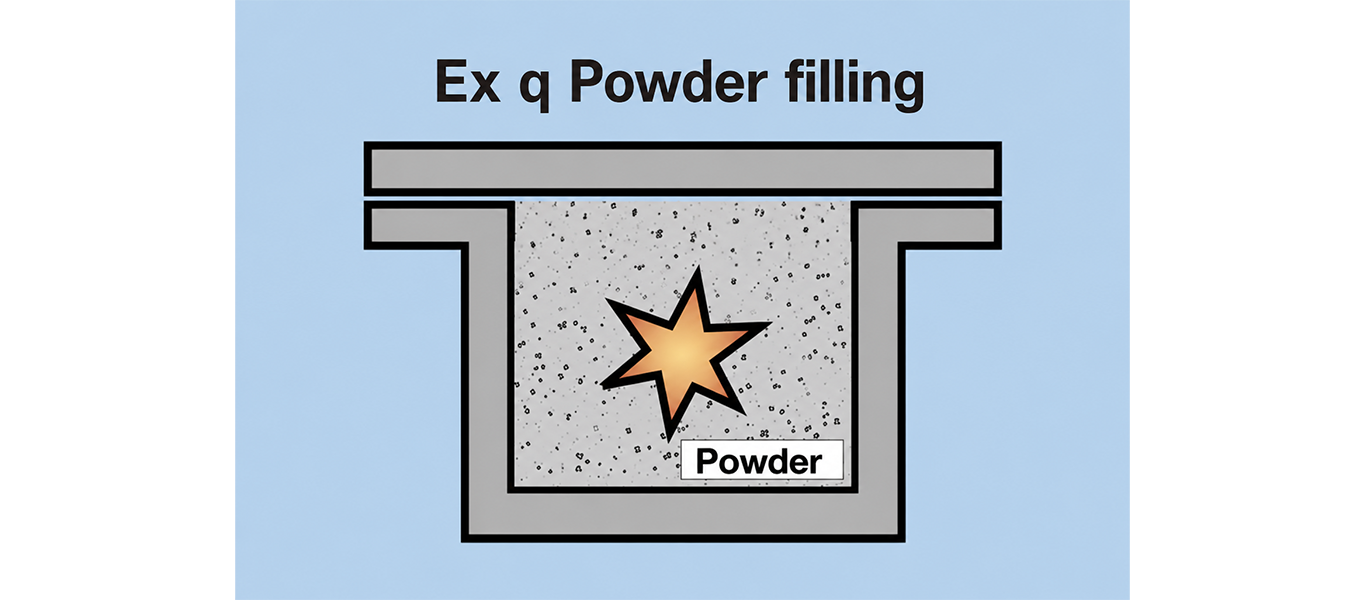
Figure 1: Ex q protection by powder filling
Explosion protection is not achieved by preventing the explosive atmosphere from entering the equipment. Instead, it relies on the properties of the filling powder, which minimizes the volume of explosive atmosphere that can come into contact with sparking electrical parts while simultaneously suppressing and extinguishing any flame propagation paths that may develop [3].
The filling material consists of quartz powder or glass beads, for which the standard specifies stringent particle size distribution requirements.
The Ex q protection concept provides an Equipment Protection Level (EPL) Gb for gas groups IIA, IIB and IIC. It is not a protection method developed for combustible dust atmospheres; consequently, no EPL is defined for dust explosion hazards. However, its use is also recognized in mining applications with EPL Mb.
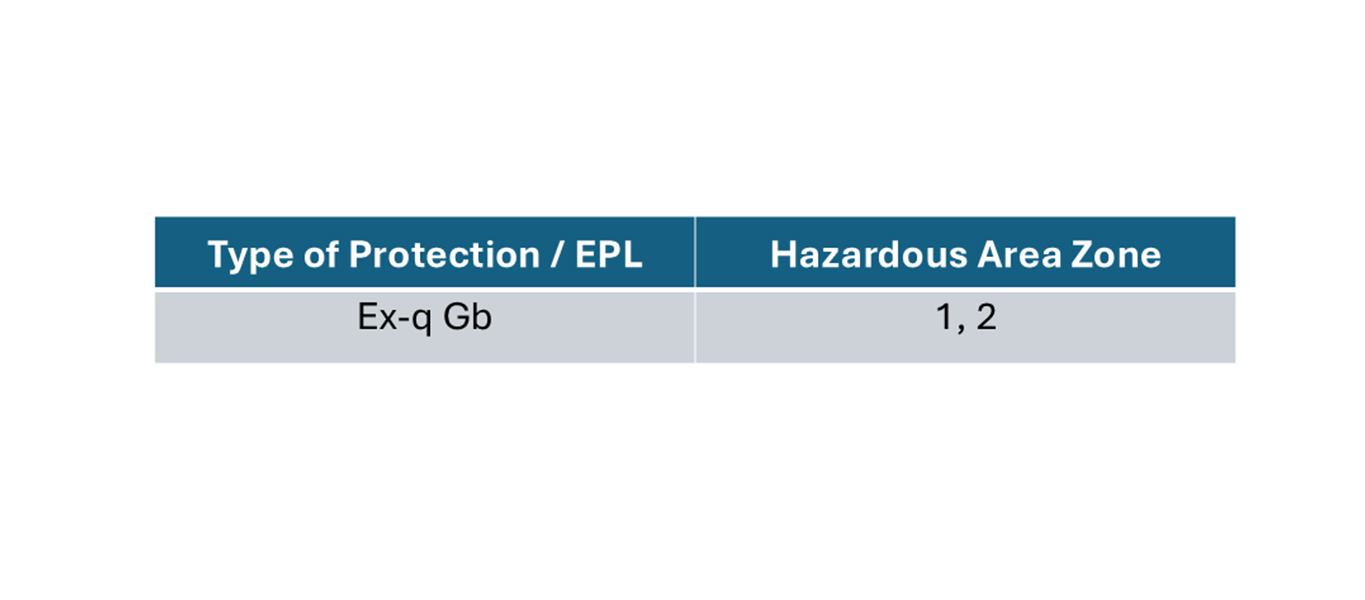
Table 1 - Relationship between the type of protection, EPL and installation zone
LoreAs with the Ex mb encapsulation protection method, careful consideration shall be given to the possible failure of any component and its consequences on both the integrity of the container and the maximum surface temperature of the equipment. Many components may be excluded from this fault analysis provided they are adequately derated with respect to their rated operating parameters.
Additional requirements specified in IEC/EN 60079-5 concern the mechanical strength of the container, which may be subject to routine testing, as well as strict limitations on electrical characteristics, namely:
- maximum current: 16 A
- maximum voltage: 1000 V
- maximum power: 1000 W
Further limitations include the enclosure ingress protection rating (IP) [4] and a maximum total stored energy of 20 J in the capacitors contained within the electrical equipment.
Applications
The Ex q type of protection is commonly used in components for lighting equipment, electronic drivers, and discrete components such as capacitors in traditional discharge lamps.
Some manufacturers continue to use this protection method in drivers for modern LED luminaires as well as in emergency lighting modules.
Other applications include I/O control boards in systems incorporating multiple protection concepts (such as Ex eb, Ex q and Ex ia) within the same equipment. Power supplies intended for installation in Zone 1 and designed to supply intrinsically safe equipment may also incorporate Ex q powder filling alongside other protection methods.
Due to its construction principle, this protection concept cannot be used for equipment containing internal moving parts.
Conclusions
The Ex q type of protection, also known as powder filling, is still employed in components and electrical equipment intended for use in potentially explosive atmospheres. However, its use has gradually declined because of the widespread adoption of Ex mb encapsulation.Indeed, Ex mb benefits from a highly mature industrial manufacturing process capable of consistently delivering excellent product quality, making it the preferred solution for many modern applications.
References and Bibliography
[1] To avoid confusion with the term enclosure used in the general standard IEC/EN 60079-0, the term container in this article refers specifically to the vessel that is in direct contact with the powder filling.
[2] The designation "q" originates from the use of quartz powder or glass beads as the filling material.
[3] IEC 60079-5, Clause 3.1, Note.
[4] The container shall provide a minimum degree of ingress protection depending on its intended installation:
- IP54 for outdoor applications;
- IP43 for installation in clean and dry indoor environments; or
- no specific IP rating is required when the container is installed inside an enclosure providing at least IP54 protection.