Ex-o: explosion protection ‘immersed’ in liquid
A protection method based on the segregation of electrical components from the explosive atmosphere
by Andrea Battauz, Senior Mechanical Design Engineer of Cortem Group
Indroduction
Following the article published in May on the Ex-m protection method (protection by encapsulation) and the one published in July on the Ex-q protection method (protection by powder filling), we now examine the Ex-o protection method (protection by immersion in protective liquid) [1].
The current reference standard is IEC 60079-6, issued in its fourth edition in 2015 and subsequently supplemented in March 2020 by amendment IEC 60079-6:2015/A1:2020. In Italy, it has been adopted as CEI EN 60079-6/A1:2025, classification CEI 31-82:V1.
The Protection Method
Equipment using the Ex-o protection method has its electrical parts immersed in a protective liquid that separates them from the external explosive atmosphere. It is therefore, in all respects, a protection method based on the concept of segregation [2], in which ignition-capable parts are separated from the potentially explosive atmosphere [3].
In order to maintain the protection, it is extremely important to ensure that the liquid level remains within the specified range, with a minimum level when the device is cold and a maximum level when the device is hot [4]. This takes into account the inevitable expansion or contraction of the liquid due to temperature variations [5]. For this reason, clear transparent level indicators must be provided so that they can be included in a maintenance plan and/or remote level indicators and/or protection devices capable of disconnecting the equipment from the power supply.
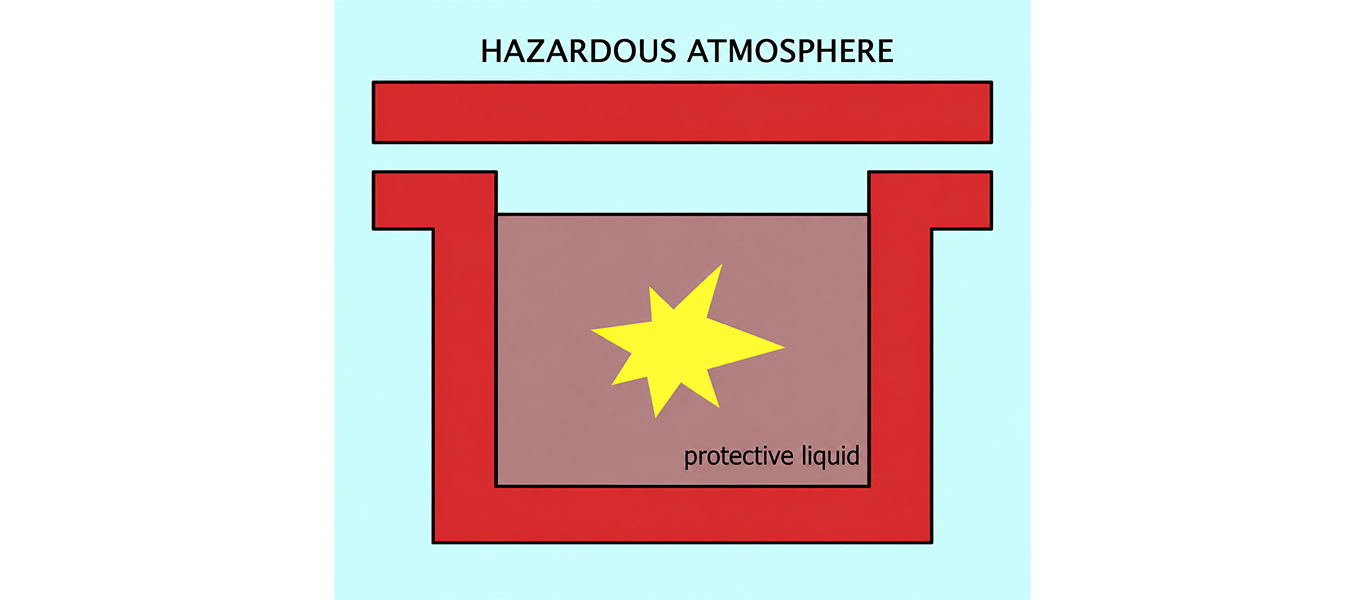
Figure 1: Ex-o protection by immersion in liquid
The Ex-o protection method provides an Ex-ob level of protection for EPL Mb and Gb and Ex-oc for EPL Gc. As with the Ex-q protection method, this protection method was not developed for dust and therefore there is no dedicated EPL for the risk of an explosive atmosphere caused by combustible dust (DUST).
The Ex-ob protection method must be ensured during normal operation and in the event of expected malfunctions.The external enclosure of the equipment must also comply with certain requirements, primarily chemical compatibility with the liquid used and resistance to certain pressure levels. The liquid may partially vaporise during the occurrence of electrical arcs, creating vapour pockets that exert pressure on the external enclosure [6].
There are two types of enclosures: completely sealed enclosures and enclosures provided with a vent. In both cases, the enclosure must demonstrate resistance to overpressure tests.
The protective liquid may be mineral oil; the “o” in Ex-o derives precisely from the use of this type of liquid. Other permitted liquids include liquid silicones and synthetic ester liquids, the latter being much less sensitive to moisture.
As regards the limits on electrical parameters, the maximum permitted voltages are 11 kV for devices with EPL Gb and 15 kV for EPL Gc [7].
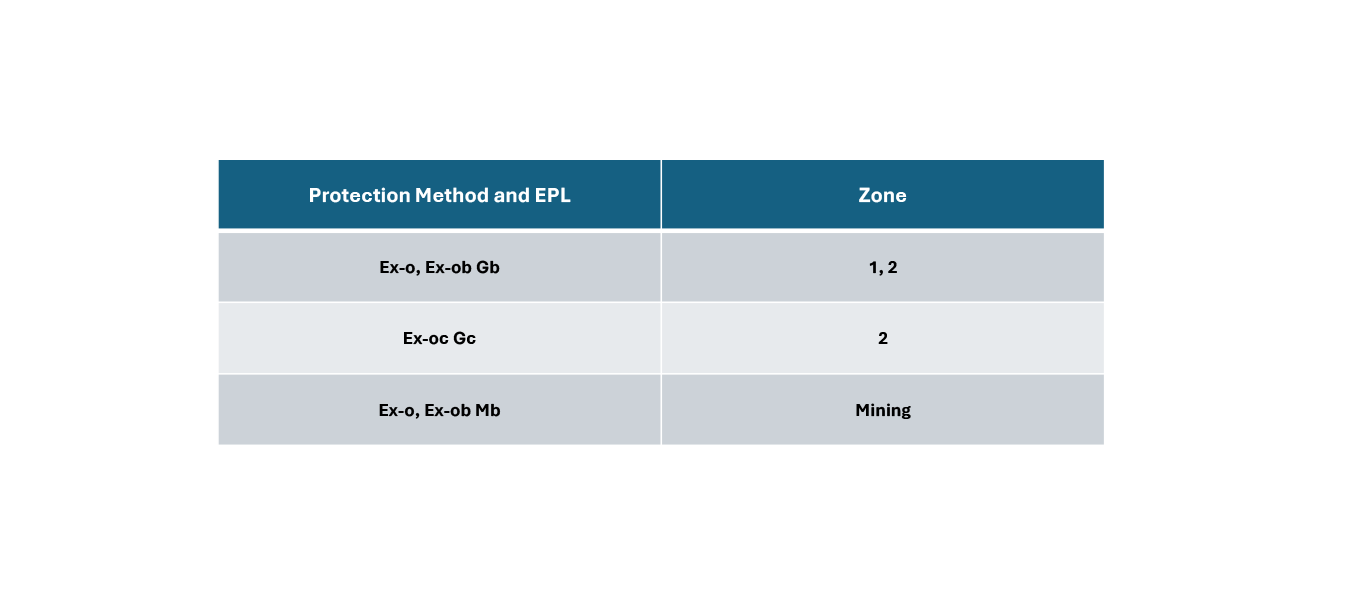
Table 1: Correspondence between protection method/EPL and installation zone
Applications
The Ex-o protection method is rarely used. Its main field of application is transformers with EPL Gb for high power levels, which can reach up to 1000 kVA. These large devices could not be manufactured using flameproof enclosures because of their considerable dimensions.
The connection terminal compartment is often designed with increased safety Ex-e protection, or special high-voltage connectors are used.
Another advantage of this protection method is that, inside these transformers, the liquid acts as a heat dissipater more efficiently than simple natural convection in free air.
Conclusions
Despite its limited use, the Ex-o protection method by immersion in liquid offers an excellent safety solution for high-power applications.
Immersion in dielectric liquid is, after all, a well-established technology in medium- and high-power industrial transformers, where heat dissipation and the insulating properties of the fluid are significantly better than those of dry-type systems.
Reference Standards and Bibliography
[1] The “o” derives from the historical use of industrial oils, which were already used in industrial equipment such as large transformers.
[2] See the Cortem article dated 27/07/2021: The explosion-protection methods of protection: basic concepts
[3] The minimum immersion depth varies depending on the voltage and on whether or not a switching device is present (between 3 and 50 mm) – Table 2, IEC 60079-6:2015.
[4] Taking into account the ambient temperature range expected for the installation of the equipment.
[5] Section 3.5 and Section 3.6 – IEC 60079-6:2015.
[6] The minimum pressure resistance level is 150 kPa; it should be noted that this is nevertheless not comparable to the pressure resistance levels required for the Ex-d method.
[7] Following the 2020 extension, these values were increased to 245 kV with specific additional safety systems.