The NEC code and the Class/Division classification
Although the two approaches differ, certain similarities can help users understand both classification systems. Understanding the principles behind each system is crucial in today’s industrial environment, characterised by open markets and global supply chains.
by Andrea Battauz, Senior Mechanical Design Engineer of Cortem Group
Introduction
When referring to equipment intended for use in potentially explosive atmospheres, we are generally referring either to the European market, regulated by the ATEX Directive, or to international markets where the IECEx certification scheme is accepted [1].
North America is a separate case. In the United States and Canada, installations have historically followed a different classification system for hazardous areas, known as the CLASS/DIVISION system.
The NFPA 70 code
The starting point for introducing this alternative system is NFPA 70, better known as the National Electrical Code (NEC).
The acronym NFPA stands for the National Fire Protection Association, the organisation that developed the code. The code is approved by ANSI [2] and its primary objective is to protect people and property from hazards arising from the use of electricity, such as fires and electric shock.
The National Electrical Code is presented differently from the standards commonly consulted in Europe. It is more like an installer’s guide, featuring prescriptive tables, numerous drawings illustrating practical examples, and photographs of field applications.
The NEC is divided into chapters. The provisions relevant to areas classified as presenting a risk of potentially explosive atmospheres—referred to by the NEC as “Hazardous Locations”—are included in Chapter 5.
NEC: Articles 500 and following
NEC Articles 500 through 504 cover the requirements for electrical and electronic equipment, and its connections, intended for locations classified as Class I (Divisions 1 and 2), Class II (Divisions 1 and 2), and Class III (Divisions 1 and 2). These locations may present fire or explosion hazards due to flammable gases, vapours from flammable or combustible liquids, combustible dusts, or ignitable fibres or flyings.
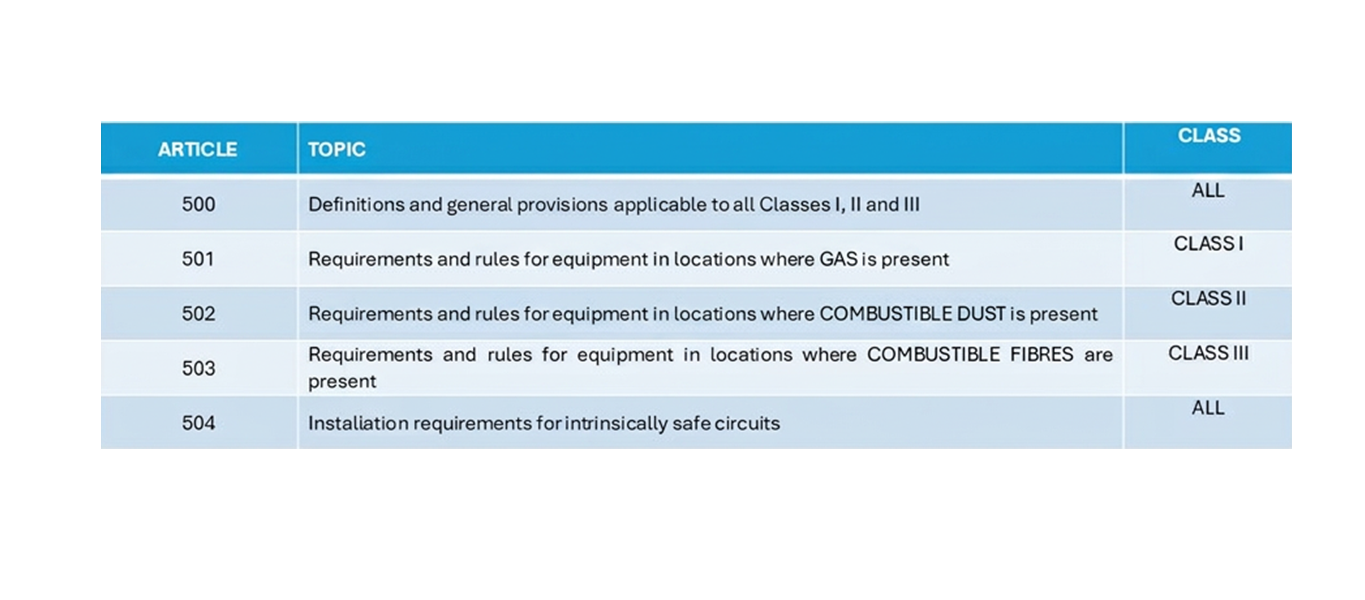
Table 1 – Topics covered by NEC Articles 500–504
Classes and Divisions
Although the NEC takes a different approach from European standards, the common principles underlying explosion-risk mitigation make it possible to identify significant similarities between the two systems for classifying installations where an explosion risk may exist.
The term CLASS in the NEC can be compared with the GROUP used in ATEX standards: that is, the type of substance giving rise to the explosion risk (gas, dust, or fibre).
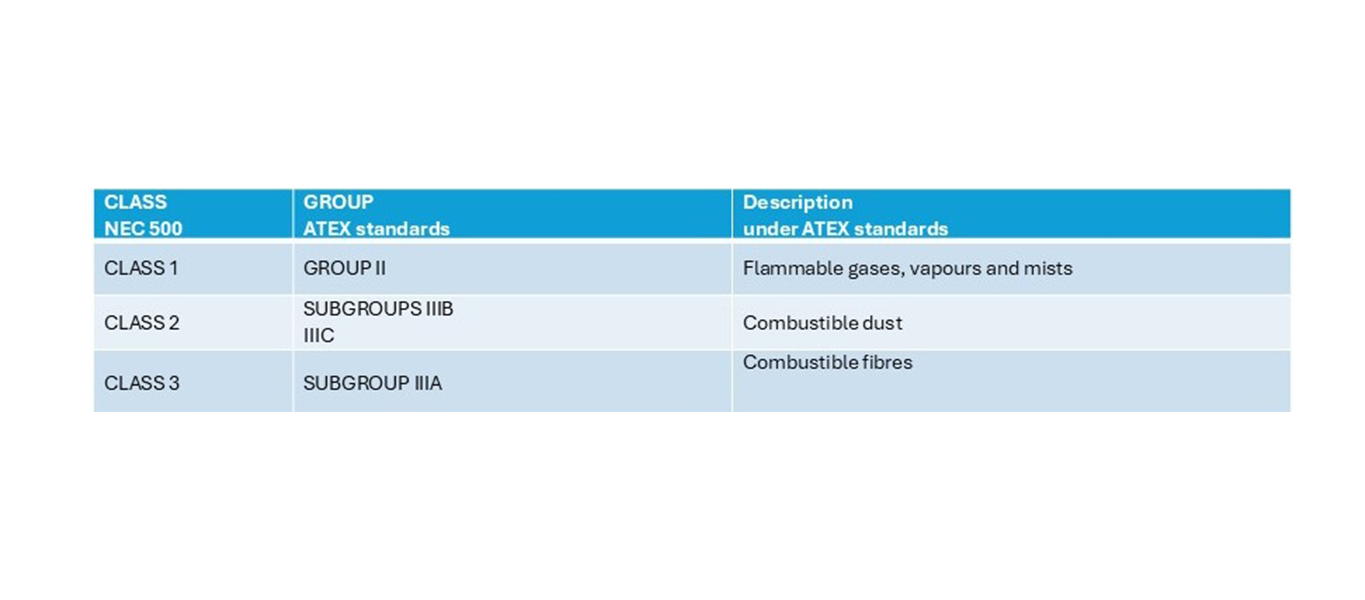
Table 2 – Comparison between CLASS (NEC 500) and Groups (ATEX) [5]
ATEX Group I, which applies to mines, has no direct equivalent in the NEC. In the United States, the NEC applies to surface installations and is overseen by OSHA [3], while approval of electrical equipment for mines falls under MSHA [4].The term DIVISION can, in turn, be compared with the term ZONE used in ATEX standards. It refers to an area of an installation where an explosive atmosphere may be present. As shown in Table 3, ATEX Zones 0 and 1 are both mapped to Division 1. The American approach can therefore be regarded as more conservative than the European approach.
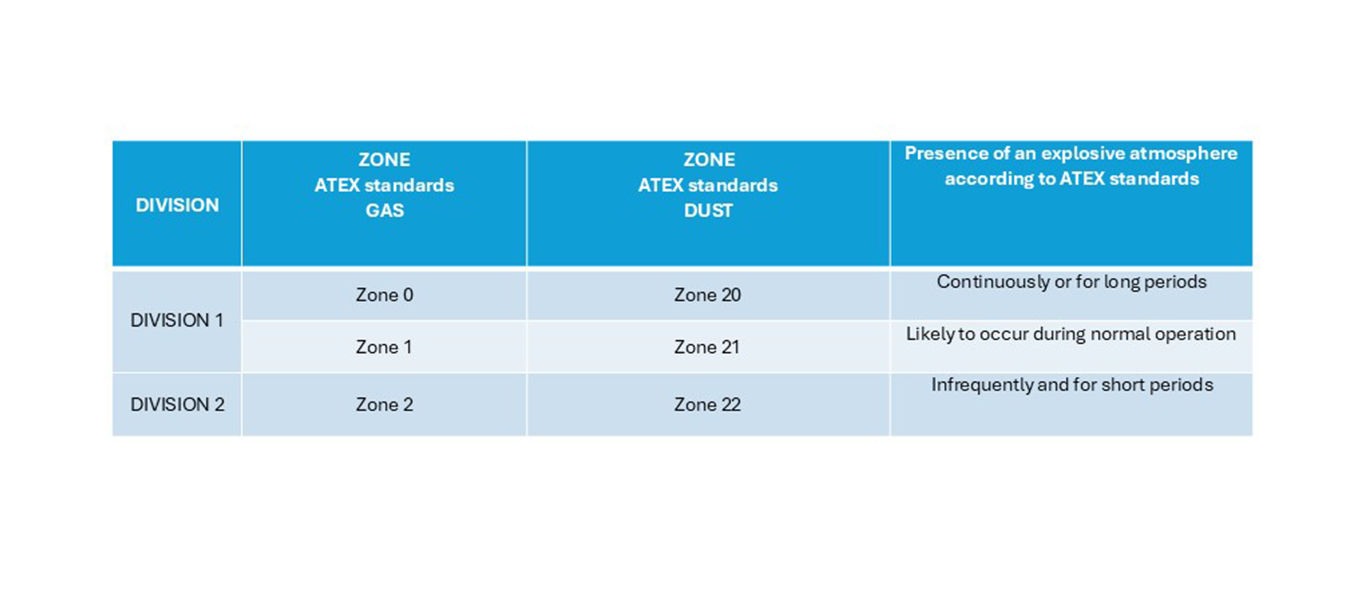
Table 3 – Comparison between DIVISION (NEC 500) and ZONES (ATEX) [5]
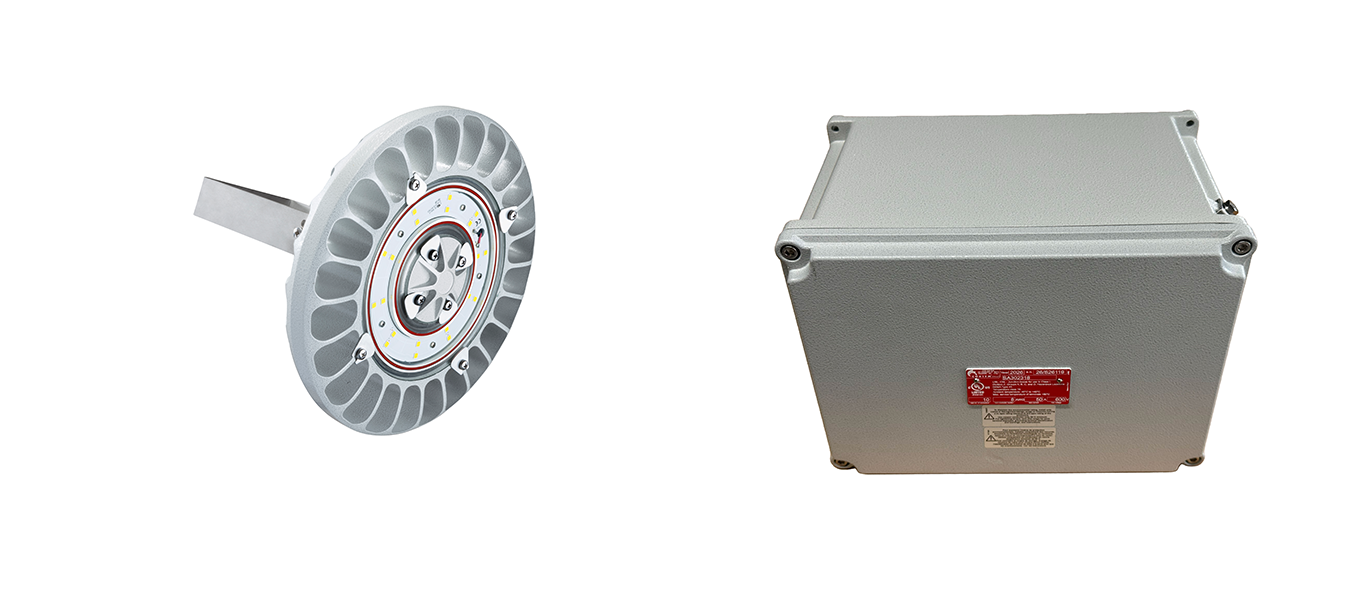
The FLowex-MN-..-UL series of luminaires, available in different sizes and power ratings, is suitable for use in Class I, Division 2 hazardous locations. The SA series in aluminium and the CTB series in stainless steel have been certified as junction boxes for Class I, Division 2.
Conclusions
Although the two approaches differ, certain similarities can help users understand both classification systems. Understanding the principles behind each system is crucial in today’s industrial environment, characterised by open markets and global supply chains.
Notes and references
[1] Possibly subject to national deviations and/or used as the basis for national certification.
[2] Referenced in OSHA 1910.307(c)(2)(i) – 1910.307, Hazardous (classified) locations.
[3] Occupational Safety and Health Administration.
[4] Mine Safety and Health Administration.
[5] These comparison tables do not indicate equivalence. As explained above, the two classification systems are different.