Ex-m: encapsulation protection for explosive atmospheres
Derived from a protection system already widely used in industrial applications, the Ex-m protection method has found extensive use in equipment designed for operation in explosive atmospheres, while also enabling new applications in combined protection concepts and in the broad deployment of industrial electronics.
by Andrea Battauz, R&D Manager of Cortem Group
Introduction
In the study of protection methods for equipment intended for use in hazardous areas where explosive atmospheres may occur, one encounters techniques already adopted in industrial applications which, when suitably enhanced, ensure safety even under such conditions.
Among the protection methods based on the concept of segregation [1] — namely the separation between ignition sources and the explosive atmosphere — encapsulation protection Ex-m is included. Industrial devices such as PCB-mounted electronic equipment, semiconductors, and solenoids commonly use encapsulation compounds to provide protection against moisture, external agents, and contamination. By applying this concept, the Ex-m protection method ensures that the external, potentially explosive atmosphere cannot penetrate the volumes containing sparking components [2].
The current reference standard is IEC 60079-18, released in its fifth edition in 2025 and adopted in Europe as EN IEC 60079-18. Originally, this standard belonged to the so-called 50000 series published by CENELEC, which included standards related to Ex equipment and has now been incorporated into the IEC 60079 series. Specifically, reference can be made to EN 50028, published by CENELEC in 1987.
Type of Protection
Components protected by the Ex-m protection method are physically separated from the surrounding atmosphere through encapsulation within a compound. In modern applications, epoxy or silicone resins are typically used as encapsulating materials; less frequently, thermosetting, thermoplastic, or elastomeric materials are employed as alternatives.

Figure 1: The Concept of Segregation
This protection method also incorporates Equipment Protection Levels (EPLs). In particular, three protection levels are defined, as illustrated in Table 1. It should be noted that the Ex-m protection method can be used not only for potentially explosive gas atmospheres but also for combustible dust atmospheres. In fact, IEC 60079-18 incorporates the requirements previously covered by IEC 61241-18 [3], which has now been withdrawn.
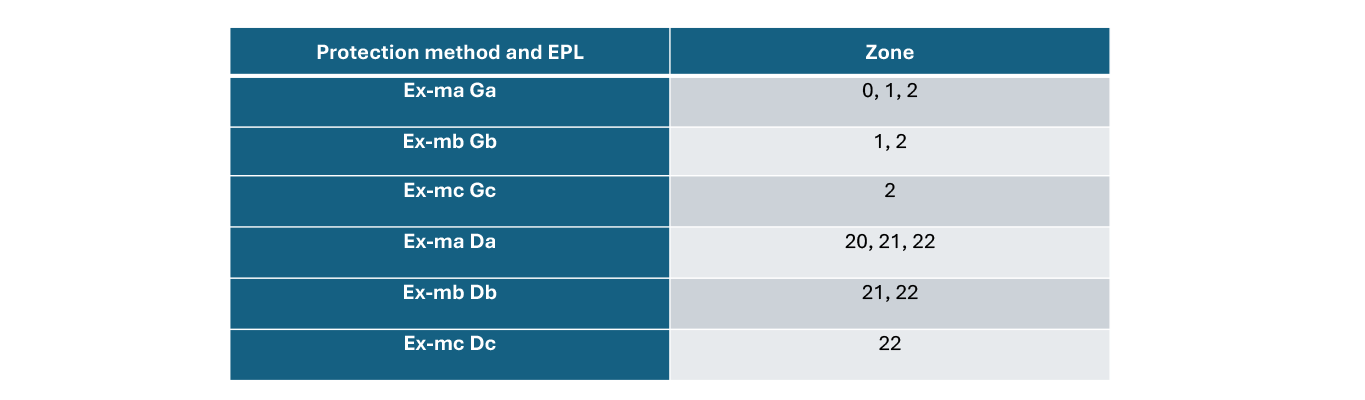
Table 1: Correlation Between Protection Method/EPL and Installation Zone [4]
Among the most significant differences between industrial-standard encapsulated equipment and equipment compliant with EN/IEC 60079-18 are fault management and its implications in terms of protection integrity and surface temperatures.
The higher the required protection level, the greater the fault tolerance that the device must provide. For EPL Ga or Da, safety shall be ensured in the presence of two independent faults; for EPL Gb or Db, in the presence of one fault; and finally, for EPL Gc or Dc, under normal operating conditions only. To guarantee compliance with these requirements, the manufacturer must perform a fault analysis on the circuit intended for encapsulation.
Additional peculiarities involve mechanical aspects of the encapsulation, including specific requirements concerning the enclosure, process description, and materials used.
Applications
The Ex-m protection method is widely used in simple devices such as transformer windings and solenoids for solenoid valves. More recently, it has found increasing application in electronic devices intended for field use in Zone 1 and Zone 2 hazardous areas. Equipment such as network electronics, FIELDBUS devices, and associated apparatus often use a combination of protection methods — primarily Ex-e, Ex-i, and Ex-m — to achieve EPL Gb.
A newer product category employing the Ex-mb protection method for internal components is represented by increased safety Ex-eb LED lighting equipment. In fact, both LED drivers and LED modules themselves can be protected by resin encapsulation.
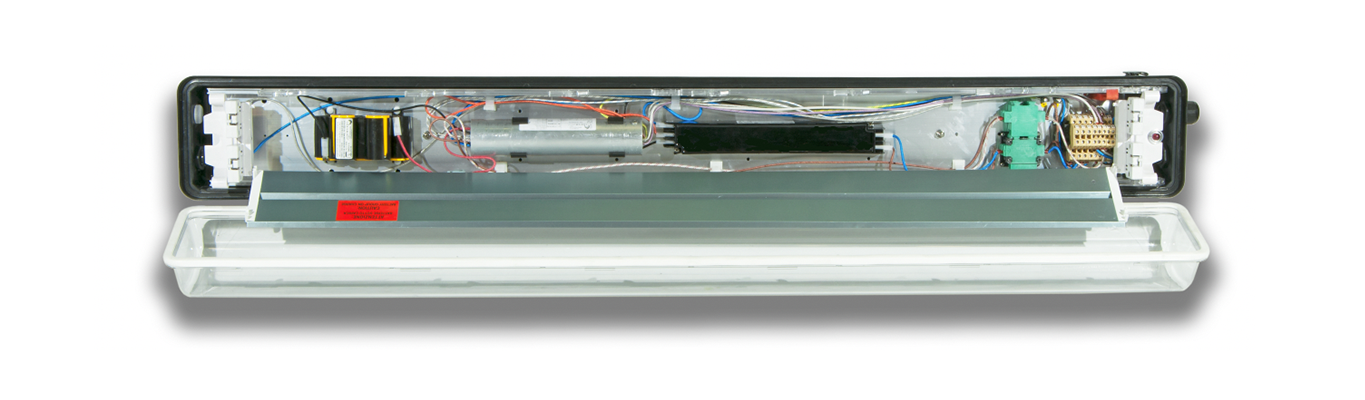
Figure 2 – Example of an Encapsulated Power Supply (black central element) Inside a Increased Safety Lighting Fixture Employing Multiple Protection Methods

Figure 3 – New-Generation Flowex Series LED Lighting Equipment Featuring Combined Protection Methods and Encapsulated Components Such as the Driver
Conclusions
Derived from a protection system already widely used in industrial applications, the Ex-m protection method has found extensive use in equipment designed for operation in explosive atmospheres, while also enabling new applications in combined protection concepts and in the broad deployment of industrial electronics.
Reference Standards and Bibliography
[1] For further information, see the article: Basic concepts of explosion protection methods
[2] The term “sparking” refers to a device capable of generating ignition sources, for example during the opening phase of a switch contact.
[3] Electrical apparatus for use in the presence of combustible dust – Part 18: Protection by encapsulation ‘mD’
[4] The protection method also allows application to Group I devices, i.e. equipment intended for mining applications. This article focuses on Group II (gas) and Group III (dust) equipment.